
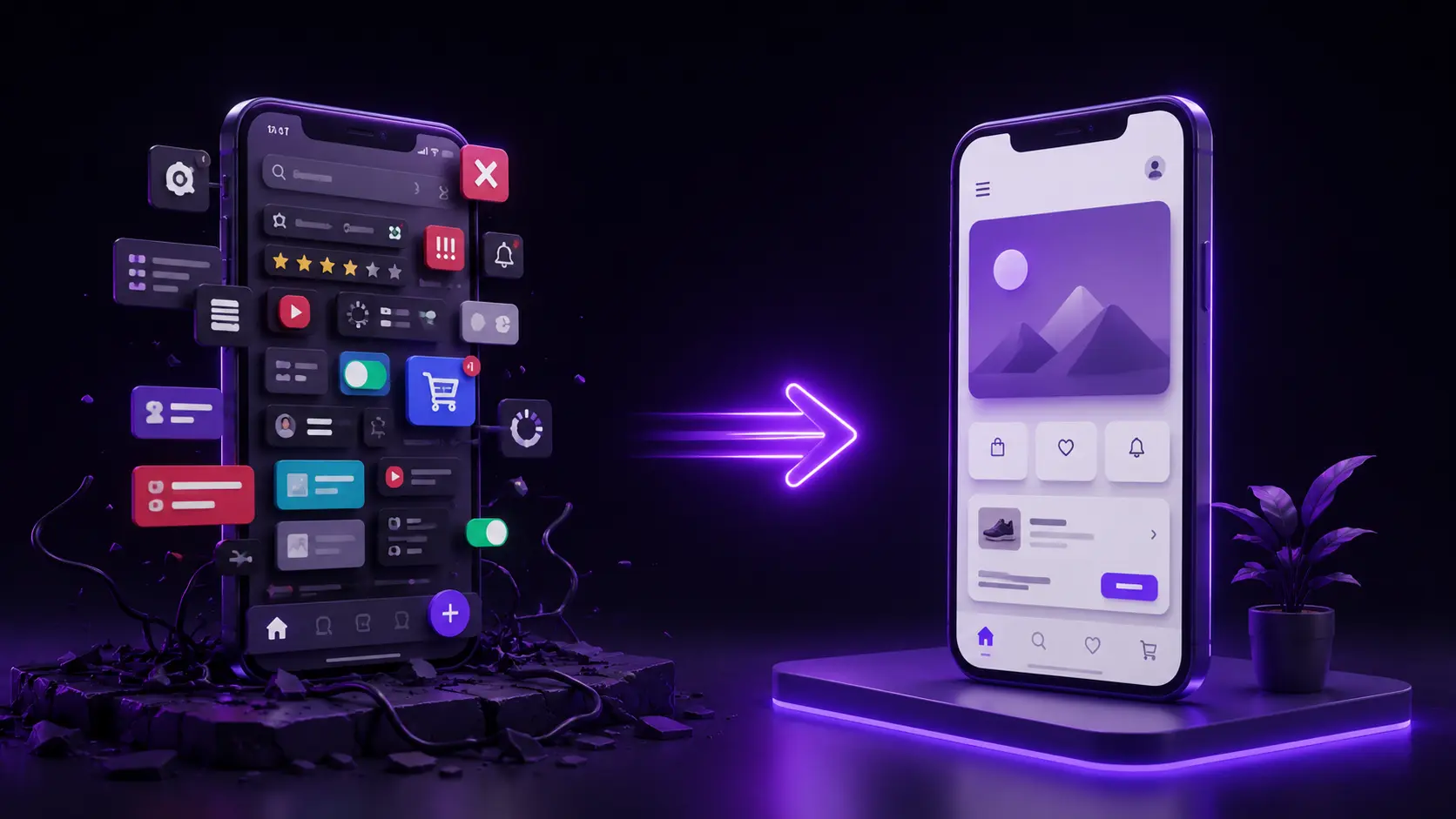
Most apps lose the majority of users within the first week after install. That’s rarely a marketing problem — it’s usually a UX design mistakes app development Hyderabad teams see repeated across otherwise well-built products.
As a UI/UX design company in Hyderabad, we’ve audited dozens of apps struggling with retention. Here are the five mistakes we find most often.
Mistake 1: A Confusing First-Time Experience
Users decide within seconds whether an app is worth their time. If the first screen is confusing or demands too much before showing any value, they leave immediately.
Fix this with a focused onboarding flow. Show the core value fast, and save secondary features for later.
Mistake 2: Asking for Too Much Too Soon
Requesting account creation, notification permissions, and location access all before a user has experienced any value is a fast way to lose them. Each request is a moment they can say no and leave.
Instead, ask for permissions in context, right when the feature actually needs them. This dramatically improves acceptance rates.
Mistake 3: No Clear Value in the First Session
Users need to experience your app’s core benefit within the first session, not the fifth. If it takes too long to reach that “aha moment,” most users won’t stick around long enough to find it.
Map your onboarding around getting users to that moment as fast as possible. Everything else can wait.
Mistake 4: Inconsistent Navigation Patterns
Switching navigation styles between screens confuses users and breaks the mental model they’ve built of how your app works. Consistency matters more than any single screen’s clever design.
Follow platform conventions where possible. Apple’s Human Interface Guidelines and Material Design both exist because familiar patterns reduce cognitive load.
Mistake 5: Ignoring Re-Engagement Design
Many apps focus entirely on the first session and neglect why users would come back. Push notifications, in-app achievements, or genuinely useful reminders all support this — but only when done thoughtfully.
Overdoing notifications backfires fast. Users disable them entirely, cutting off your best re-engagement channel permanently.
How to Diagnose Your Own Retention Problems
Session recordings and heatmaps from tools like Hotjar reveal exactly where users drop off, rather than guessing. Pair this with funnel analysis to see which specific step loses the most people.
Nielsen Norman Group’s research and ongoing coverage on UX Planet both offer strong frameworks for diagnosing retention issues systematically rather than through assumptions.
Testing Fixes Before Full Rollout
Don’t guess which fix will work. A/B test onboarding changes on a subset of users first, measuring actual retention impact before rolling changes out to everyone.
Small, measured changes compound. A 10% improvement in day-one retention meaningfully changes your long-term user base over months.

How NRS Technologies Fixes Retention-Killing UX
We audit onboarding flows against real user behavior data, not assumptions about what “should” work. Our UI/UX design services include this kind of retention-focused analysis as standard practice.
As a result, clients see measurable improvements in early retention without a complete app redesign. Our mobile app development services also build these UX principles directly into new app projects from the start.
Frequently Asked Questions
What’s the most common reason apps lose users in the first week? A confusing or overwhelming first-time experience is typically the biggest factor, since users decide within seconds whether an app is worth continuing to use.
Should apps ask for all permissions during onboarding? No, requesting permissions in context, right when a feature needs them, significantly improves acceptance rates compared to asking for everything upfront.
How can I identify where users drop off in my app? Session recordings, heatmaps, and funnel analysis tools like Hotjar reveal exactly where users abandon the experience, rather than relying on assumptions.
Do push notifications actually improve retention? Yes, when used thoughtfully and sparingly. Overdoing notifications often backfires, causing users to disable them entirely and cutting off a valuable re-engagement channel.
How quickly should a user experience an app’s core value? Ideally within the first session. The longer it takes to reach that key moment, the more users abandon the app before ever experiencing its benefit.
Is A/B testing necessary for fixing UX retention issues? It’s strongly recommended. Testing changes on a subset of users first confirms actual impact before rolling changes out to your entire user base.
Final Thoughts
Retention problems are usually UX problems, not marketing problems. Fixing the first-session experience and reducing friction consistently delivers stronger results than acquiring more users into a leaky funnel.
Ready to get started? Contact NRS Technologies at hello@nrstechnologies.com or visit nrstechnologies.com/contact for a free UX retention audit.