
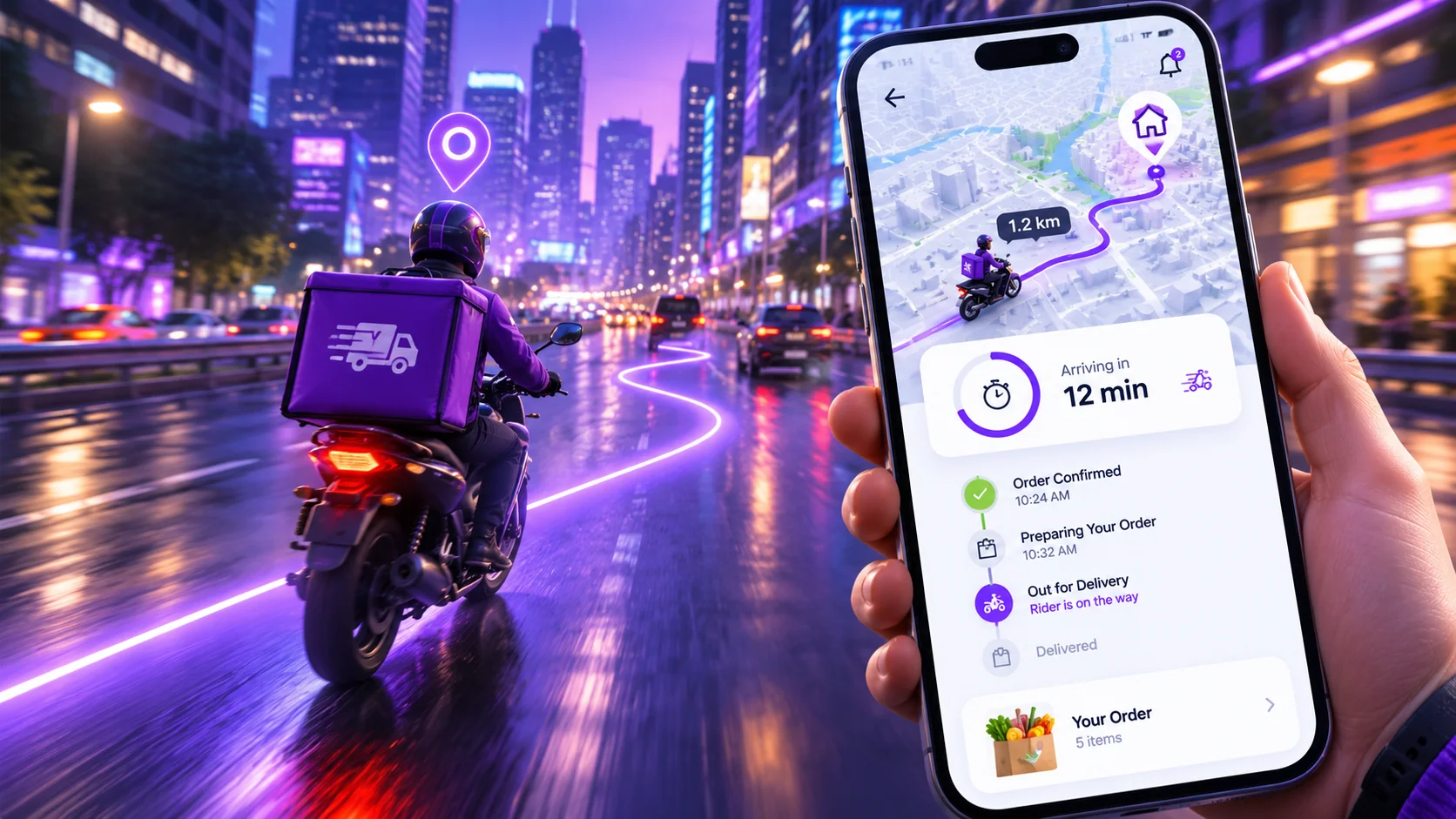
On-demand delivery has expanded well beyond food — groceries, medicines, documents, and local errands all now run through dedicated apps. That’s the growing opportunity behind most on-demand delivery app development Hyderabad inquiries we receive from founders eyeing a specific category.
As a mobile app development company in Hyderabad, we’ve built delivery platforms across several verticals. Here’s what actually goes into one.
Categories Beyond Food Delivery
Grocery delivery, medicine delivery, and hyperlocal courier services all follow similar core architecture with category-specific variations. Choosing a focused vertical, rather than trying to serve everything at once, typically gives new platforms a clearer path to initial traction.
So the underlying technology often looks similar across categories — the differentiation comes from operational details and category-specific trust signals.
Core Apps Every Delivery Platform Needs
Four connected experiences form the foundation of any on-demand delivery platform:
- Customer app — browsing, ordering, and real-time tracking
- Delivery partner app — order assignment, navigation, and earnings tracking
- Vendor/merchant panel — order management for stores or service providers
- Admin dashboard — oversight, dispute resolution, and analytics across the platform
Skipping any of these creates operational gaps that become expensive to patch after launch.
Real-Time Tracking and Route Optimization
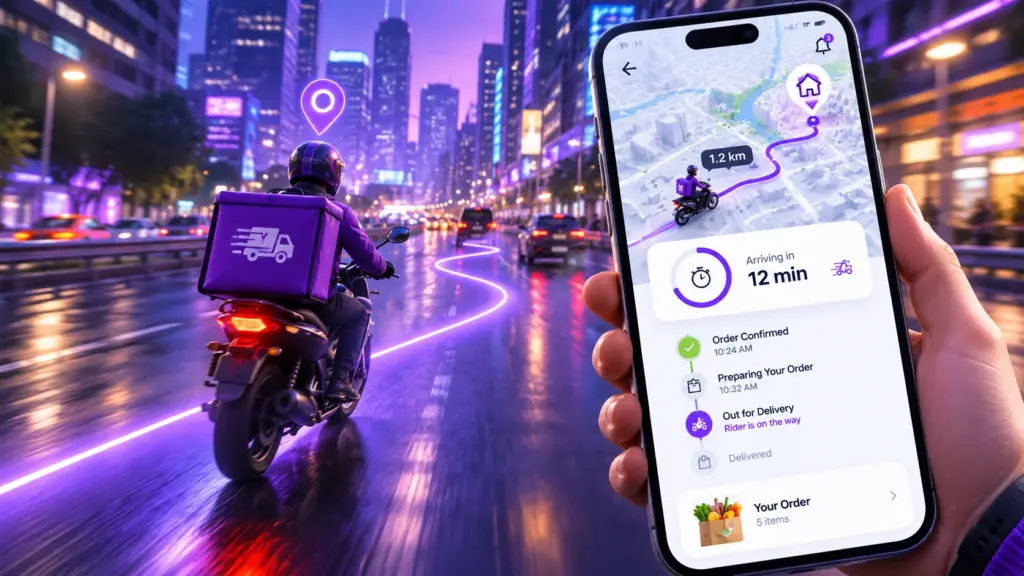
Customers expect live tracking as a baseline feature, not a premium add-on. This requires persistent location updates from the delivery partner’s app to the customer’s app, typically implemented through Google Maps Platform for both tracking and route optimization.
Route optimization becomes increasingly valuable as delivery volume grows, reducing both delivery time and per-order operational cost.
Delivery Partner Assignment Logic
Efficiently matching available delivery partners to new orders is one of the most technically complex parts of the system. Factors like partner proximity, current load, and delivery zone all need to feed into assignment logic that works reliably even during peak demand periods.
Start with simpler assignment logic at launch, then refine based on real operational data rather than over-engineering this before you have actual usage patterns to learn from.
Payment and Payout Infrastructure
Customers need seamless payment through UPI, cards, and often Cash on Delivery, handled through gateways like Razorpay. Delivery partners also need reliable, timely payout systems — delayed or inconsistent partner payments quickly damage platform trust and partner retention.
Recommended Technology Stack
- Frontend: React Native, for consistent customer and delivery partner apps across platforms
- Backend: Node.js, handling real-time order and location updates efficiently
- Real-time infrastructure: WebSocket-based tracking similar to Socket.io implementations
- Database: PostgreSQL, for structured order, vendor, and partner data
Launching in One City First
Validating your model in a single city or delivery zone before expanding significantly reduces risk. Operational logistics, delivery partner recruitment, and vendor onboarding all become more manageable to refine at smaller scale before multiplying complexity across new regions.
How NRS Technologies Builds Delivery Platforms
We architect delivery platforms around the four core apps from the start, with assignment logic and tracking infrastructure built to scale as order volume grows. Our mobile app development services cover this full build process.
As a result, clients launch with a platform ready for real operational demands, not just a demo. Our web development services also support the admin dashboards these platforms depend on for day-to-day operations.
Frequently Asked Questions
What’s the biggest technical challenge in delivery app development? Delivery partner assignment logic, efficiently matching available partners to new orders based on proximity and load, is typically the most complex component to build well.
Should a delivery app launch in multiple cities at once? No, launching in one city first is generally recommended, allowing you to validate operational logistics before investing in multi-city expansion complexity.
How long does it take to build an on-demand delivery app? A focused MVP covering customer, partner, vendor, and admin apps typically takes several months, depending on integration complexity and feature scope.
Do delivery apps need separate apps for customers and delivery partners? Yes, customers and delivery partners have fundamentally different needs, so separate, purpose-built apps consistently perform better than a single combined app.
How important is real-time tracking for a delivery app? Very important. Customers now expect live order tracking as a standard baseline feature, not an optional premium addition.
What payment methods should an Indian delivery app support? UPI, major cards, and often Cash on Delivery together cover the majority of Indian customer payment preferences for on-demand delivery services.
Final Thoughts
On-demand delivery apps reward founders who pick a focused vertical and validate operationally in one city before scaling. The core technology architecture matters, but operational execution ultimately determines success.
Ready to get started? Contact NRS Technologies at hello@nrstechnologies.com or visit nrstechnologies.com/contact for a free app scoping consultation.