
Complex business problems rarely have obvious solutions, and jumping straight to building often means solving the wrong problem well. That’s exactly why design thinking UX process Hyderabad teams rely on exists — to force clarity before commitment.
As a UI/UX design company in Hyderabad, we use this structured process on nearly every project. Here’s how it actually works.
What Design Thinking Actually Is
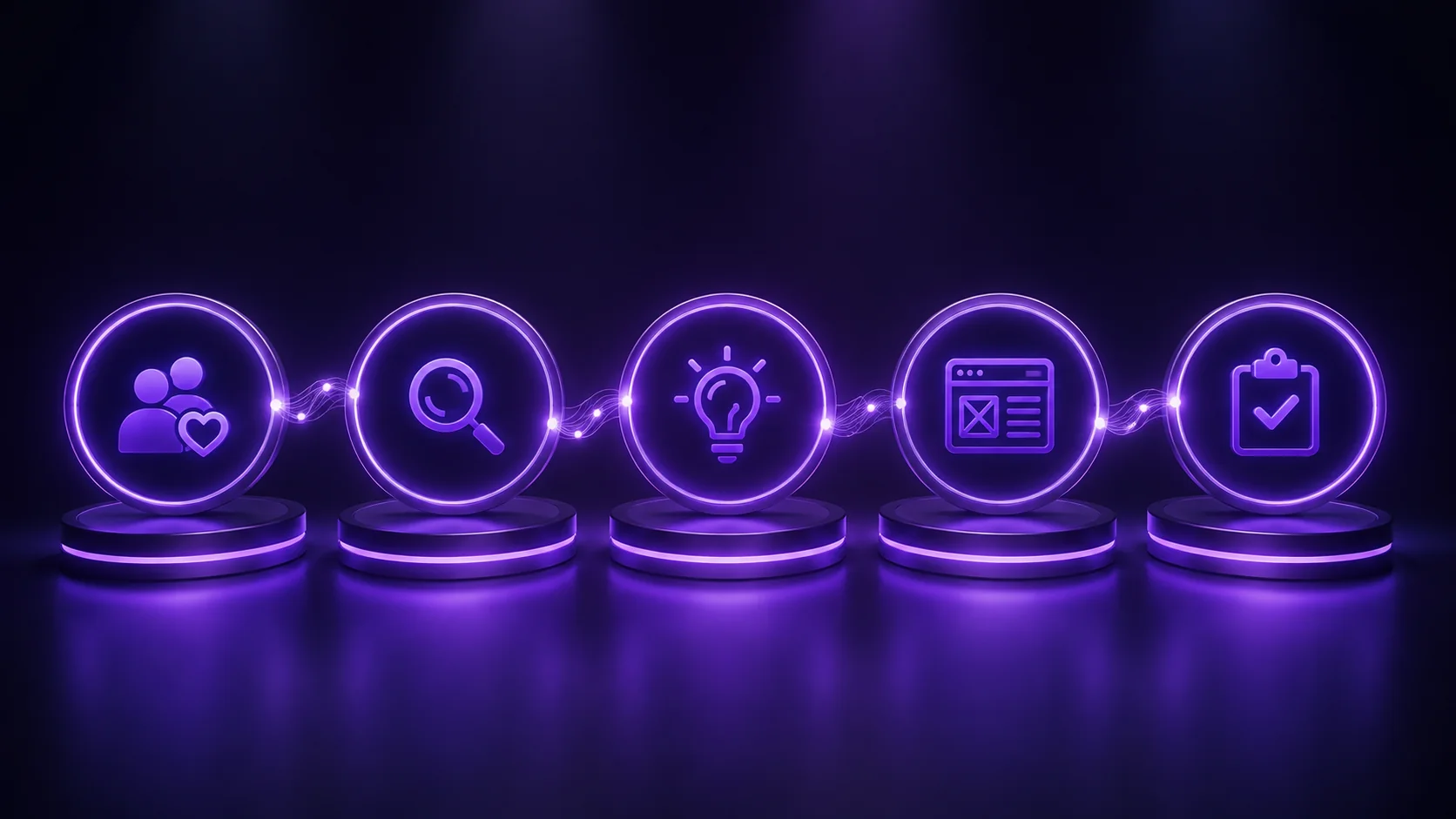
Design thinking is a structured, iterative approach to problem-solving centered on genuine user needs rather than assumptions. It moves through five distinct phases, each building on insight from the one before it.
So this isn’t just a creative brainstorming exercise. It’s a disciplined process that consistently produces better outcomes than jumping straight to solutions.
Phase 1: Empathize
Before designing anything, genuinely understand the people experiencing the problem. This means interviews, observation, and direct engagement with real users, not assumptions made from a conference room.
Skipping this phase is the single most common reason products fail to gain traction. Teams build what they assume users want, not what users actually need.
Phase 2: Define
Synthesize research findings into a clear, specific problem statement. A vague problem like “users are unhappy” doesn’t guide design decisions; a specific one like “users abandon checkout because shipping costs appear too late” does.
This phase forces discipline. Resist the temptation to define the problem broadly just to keep options open — specificity is what makes the next phases productive.
Phase 3: Ideate
Generate a wide range of possible solutions without immediately judging their feasibility. Quantity matters here more than early quality — the goal is exploring genuinely different approaches, not refining one idea prematurely.
Techniques like structured brainstorming and “how might we” framing help teams generate options beyond the first obvious idea that comes to mind.
Phase 4: Prototype
Build low-fidelity representations of your top ideas quickly, without investing in full production quality yet. A paper sketch or simple clickable mockup tests the core concept far cheaper than a fully built feature.
This phase should move fast. The goal is learning, not polish — polished prototypes actually slow down the iteration this phase depends on.
Phase 5: Test
Put prototypes in front of real users and observe how they actually respond, not how you assume they will. This often reveals that the “obvious” solution doesn’t work as expected, sending you back to earlier phases with new insight.
This is normal, not a failure. Design thinking is genuinely iterative — cycling back through phases based on what testing reveals is the process working as intended.
Why This Process Beats Jumping Straight to Solutions
Teams that skip straight to building based on assumptions frequently discover expensive problems only after launch, when fixing them costs far more than early research would have. Design thinking front-loads this discovery when changes are still cheap.
Applying Design Thinking to Business Problems Beyond Products
This framework extends well beyond product design — it applies equally to internal process problems, service design, and strategic business decisions where genuine user or stakeholder needs matter.
How NRS Technologies Uses Design Thinking
We run structured empathize, define, and ideate phases before committing to a specific design direction on client projects. Our UI/UX design services build this process into every engagement, not just as an optional add-on.
As a result, clients avoid expensive rebuilds caused by solving the wrong problem confidently. Our mobile app development services and web development services both build directly on the validated direction this process produces.
Frequently Asked Questions
How long does the design thinking process typically take? It varies by project complexity, but even a compressed version, run over a few days, delivers significantly better direction than skipping the process entirely.
Is design thinking only useful for new products? No, it applies equally well to redesigning existing products, internal processes, and service design challenges where genuine user needs matter.
What happens if user testing reveals the prototype doesn’t work? This is a normal, expected outcome. Design thinking is iterative, so testing failures send you back to earlier phases with new insight, not a failure of the process.
Can design thinking be used for business problems beyond product design? Yes, the same empathize-define-ideate-prototype-test framework applies to internal processes, strategic decisions, and service design challenges beyond just digital products.
Does design thinking slow down development timelines? It adds upfront time, but typically saves far more time overall by catching problems before expensive development begins, rather than discovering them after launch.
Do all five phases need to happen in strict order? Generally yes, though the process is iterative, meaning teams often cycle back to earlier phases based on what later phases reveal, rather than moving linearly only once.
Final Thoughts
Design thinking succeeds by forcing genuine understanding before commitment, catching expensive mistakes while they’re still cheap to fix. The structured phases consistently outperform jumping straight to solutions based on assumptions.
Ready to get started? Contact NRS Technologies at hello@nrstechnologies.com or visit nrstechnologies.com/contact for a free design thinking workshop consultation.