
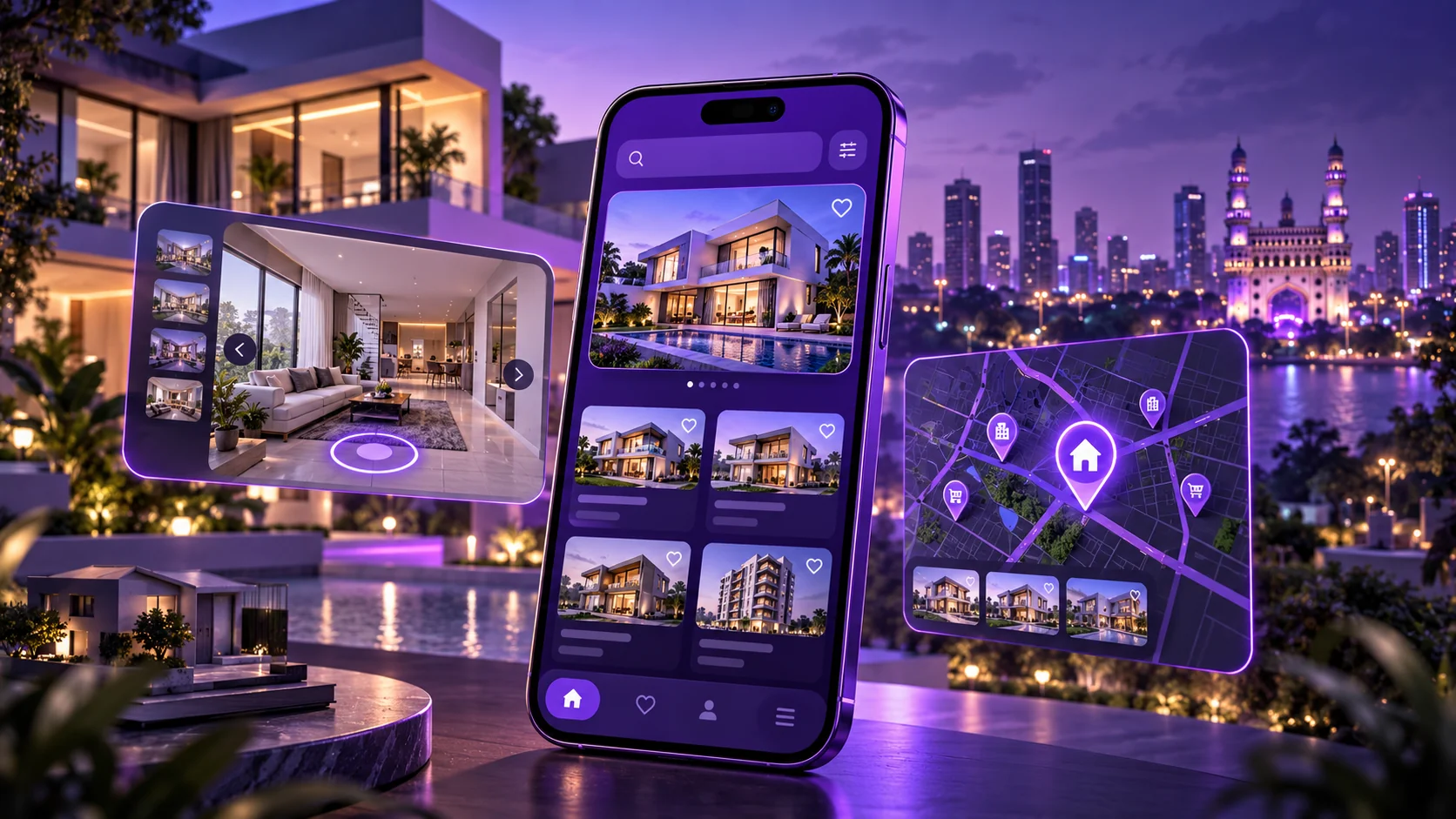
Property search and transactions have moved decisively online, and PropTech platforms now shape how Indian buyers, renters, and agents interact with real estate. That shift is exactly why real estate app development Hyderabad founders bring us reflects a genuinely maturing market, not just a trend.
As a mobile app development company in Hyderabad, we’ve built PropTech platforms across listing, rental, and agent-focused categories. Here’s what actually matters in building one.
The PropTech Opportunity in India
Property search increasingly starts online before any physical visit happens, shifting real value toward platforms that make discovery, comparison, and communication genuinely easier. This creates opportunity for both broad platforms and focused, niche players serving specific property types or regions well.
So the opportunity isn’t limited to competing with established national platforms. Regional and category-focused apps continue finding real traction.
Core Features for Property Listing Apps
- Advanced search and filters — location, budget, property type, and amenities
- High-quality photo and video galleries — critical for a category where visual assessment drives decisions
- 3D virtual tours — increasingly expected for serious property inquiries
- Location and neighborhood data — schools, transit, and amenities near a listing
- Direct messaging — connecting buyers or renters with agents or owners without friction
Skipping quality visual presentation is a fast way to lose serious inquiries to competing listings with better photos.
Building 3D Virtual Property Tours
Virtual tour technology lets prospective buyers or renters explore a property remotely before committing to an in-person visit, saving genuine time for both sides. This has become a meaningful differentiator, particularly for properties targeting buyers relocating from other cities.
Implementation typically involves either 360-degree photo capture or more sophisticated 3D scanning technology, depending on budget and the level of immersion needed.
Location and Map Integration
Precise location display, neighborhood boundary data, and proximity to amenities all rely on solid mapping integration through platforms like Google Maps Platform. This data significantly influences buyer decisions, particularly around commute times and neighborhood characteristics.
Agent and Owner Dashboards
Real estate professionals need dedicated tools for managing listings, tracking inquiries, and communicating with prospects efficiently. A well-designed agent dashboard directly affects how quickly and thoroughly agents can respond to leads, which meaningfully impacts conversion.
Payment and Transaction Features
Depending on your platform’s scope, this might include rental deposit processing, brokerage fee payments, or booking amount collection through gateways like Razorpay. Transaction trust and security matter enormously here, given the significant sums typically involved in real estate.
Recommended Technology Stack
- Frontend: React Native, for consistent cross-platform property browsing
- Backend: Node.js, handling search, filtering, and messaging efficiently
- Database: PostgreSQL, well-suited to structured property and location data
- Media infrastructure: Cloud-based image and video hosting optimized for fast loading of property galleries
Standing Out in a Competitive Category
Real estate apps compete heavily on data quality and user trust, not just feature lists. Verified listings, transparent pricing, and genuine, unedited photos build the credibility that separates trusted platforms from ones users abandon after one bad experience.
How NRS Technologies Builds Real Estate Apps
We prioritize visual presentation quality and location data accuracy from the earliest architecture decisions, since these directly drive user trust in this category. Our mobile app development services cover this full build process.
As a result, clients launch platforms built around what actually drives property decisions, not a generic listing template. Our web development services also support the agent dashboards and admin tools these platforms depend on.
Frequently Asked Questions
Do real estate apps need 3D virtual tours to compete? Increasingly, yes, particularly for higher-value properties or buyers relocating from other cities, where virtual tours meaningfully reduce the need for early in-person visits.
What’s the biggest factor in real estate app user trust? Data quality and listing accuracy, including genuine, unedited photos and verified information, typically matter more to users than feature volume alone.
How important is location data for a real estate app? Very important. Precise location, neighborhood context, and proximity to amenities significantly influence buyer and renter decisions throughout the property search process.
Should a real estate app handle payments directly? It depends on platform scope. Some platforms handle booking deposits or brokerage payments directly, while others focus purely on discovery and connection, leaving transactions offline.
Can a niche or regional real estate app compete with major national platforms? Yes, focused platforms serving specific regions or property categories well continue to find genuine traction, even alongside larger, broader competitors.
How long does it take to build a real estate app with core PropTech features? A focused MVP with search, listings, and messaging typically takes a few months, with virtual tour and advanced dashboard features extending timeline depending on scope.
Final Thoughts
Real estate app development rewards platforms that prioritize data quality and visual presentation over feature volume alone. Trust, built through genuine listing accuracy, ultimately determines which PropTech platforms succeed long-term.
Ready to get started? Contact NRS Technologies at hello@nrstechnologies.com or visit nrstechnologies.com/contact for a free PropTech app consultation.