
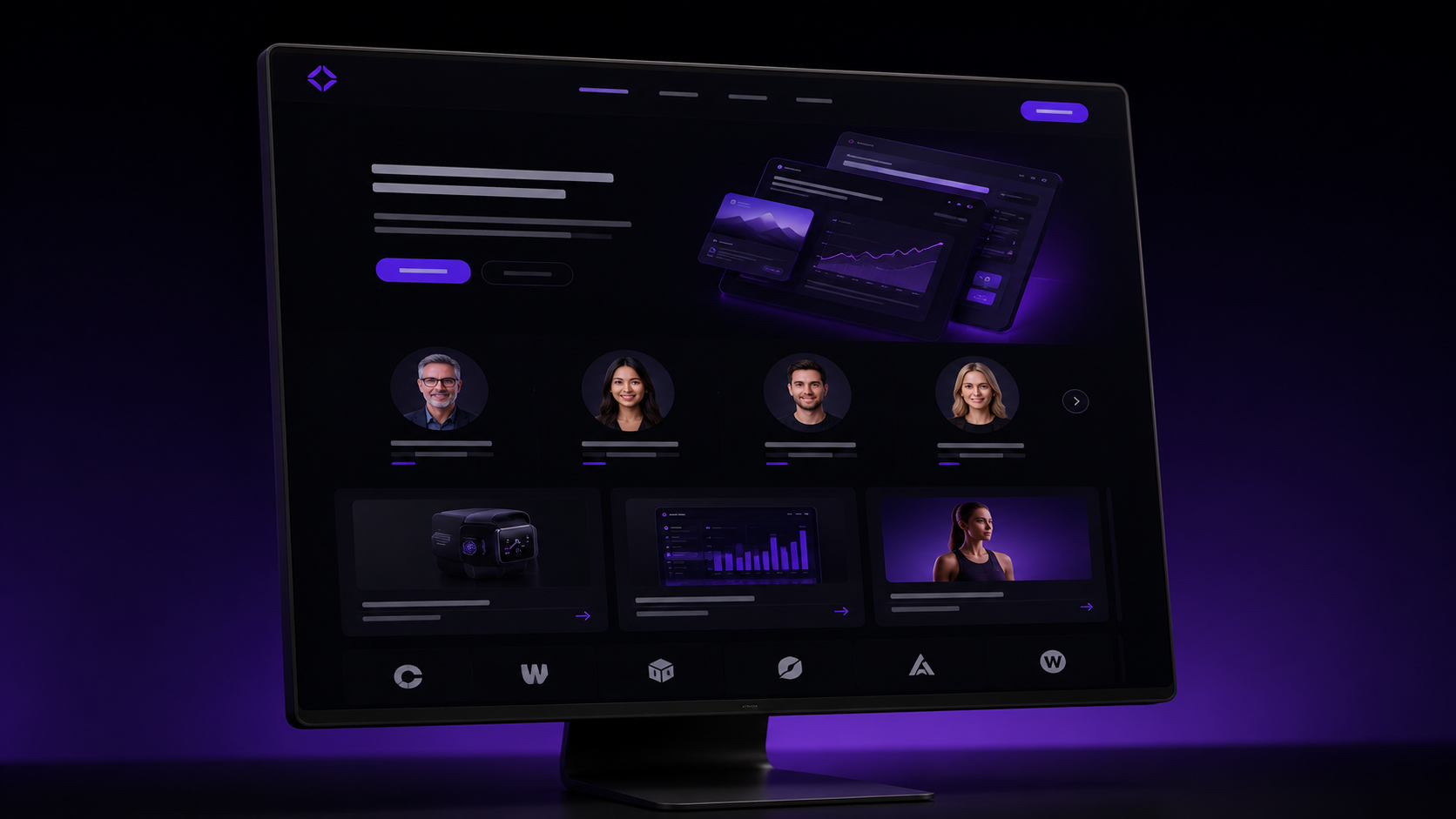
B2B buyers behave nothing like B2C shoppers — they research extensively, involve multiple stakeholders, and rarely convert on a first visit. As a corporate website design company in Hyderabad working with B2B clients, we’ve found the same structural gaps keep costing businesses qualified leads: missing trust signals, unclear differentiation, and no clear path from “browsing” to “talking to sales.”
Why B2B Websites Need a Different Approach Than B2C
A B2C visitor might buy on impulse in a single session. A B2B buyer typically returns multiple times, shares your site with colleagues, and needs to justify the decision internally before committing. This changes what your website needs to accomplish — it’s not just a storefront, it’s a research and trust-building tool that needs to work for multiple stakeholders with different priorities (technical evaluators, budget owners, end users).
The 12 Essential Sections
1. Hero Section
A clear statement of who you serve and what specific problem you solve — not a vague mission statement.
2. Services Overview
Concise, scannable summaries of each offering with clear paths to deeper detail pages.
3. Differentiators
What makes you different from the three competitors a buyer is likely also evaluating — specificity beats generic claims like “quality service.”
4. Case Studies
Concrete outcomes with real (or anonymized) numbers. Generic testimonials convince far less than a documented before-and-after result.
5. Team
B2B buyers often want to know who they’ll actually be working with — especially for service businesses and agencies.
6. Testimonials
Placed near key decision points throughout the site, not isolated to a single testimonials page nobody visits.
7. Process
A clear step-by-step of how engagement works reduces the anxiety of an unfamiliar buying decision.
8. Awards and Certifications
Third-party validation signals credibility, particularly useful for buyers unfamiliar with your brand.
9. Blog/Resources
Demonstrates expertise and supports SEO — reference frameworks from HubSpot and Salesforce’s B2B resources consistently show content depth building long-term inbound trust.
10. Careers
Signals company stability and culture — increasingly checked by B2B buyers evaluating whether a vendor is a stable long-term partner.
11. Contact
Multiple contact paths (form, email, phone, calendar booking link) rather than a single generic contact form.
12. Footer
Comprehensive sitemap-style footer aids both navigation and internal SEO link distribution.
Trust Signals for B2B Buyers
Client logos, security certifications, and specific metrics (years in business, projects completed, client retention rate) all reduce the perceived risk of choosing an unfamiliar vendor. Research on B2B buying behavior from Gartner and Forrester consistently shows buyers complete a significant portion of their evaluation before ever contacting a salesperson — meaning your website is often doing the persuading work traditionally done by a sales conversation.
Lead Generation Forms and Gated Content
Not every visitor is ready for a sales call. Gated resources (whitepapers, guides, calculators) capture earlier-stage leads who aren’t ready to talk yet but are worth nurturing. Keep initial forms short — email and name only — reserving detailed qualification questions for later in the funnel once trust is established.
Design Principles for B2B Trust
B2B design should favor clarity and professionalism over flashy animation — the goal is making complex offerings easy to understand quickly, not impressing with visual effects. Practical UX guidance from UX Design and design system references on Webflow’s blog both reinforce this principle: B2B conversion comes from clarity, not decoration.
How NRS Technologies Designs Corporate Websites
We structure every B2B site around the actual buyer journey — awareness, evaluation, decision — mapping each of the 12 sections above to where a visitor genuinely is in that process, rather than including sections just because competitors have them.
Frequently Asked Questions
How is B2B website design different from B2C design? B2B design prioritizes trust-building, detailed information, and multi-stakeholder persuasion over the fast, emotionally-driven purchase paths typical of B2C design.
Do all 12 sections need to be on the homepage? No, most sections should exist as dedicated pages with clear navigation, while the homepage highlights the most persuasive summary of each.
How important are case studies for B2B websites? Very important. Concrete, documented outcomes consistently outperform generic testimonials in building buyer confidence during evaluation.
Should B2B websites gate content behind lead forms? Selectively, yes. High-value resources like detailed guides or calculators can be gated, but keep most educational blog content open to support SEO and top-of-funnel trust building.
How often should a B2B website be redesigned? A full redesign every 3-4 years is typical, with incremental updates (new case studies, refreshed messaging) happening continuously in between.
Does a careers page actually help B2B conversion? Yes, it signals company stability and culture, which increasingly factors into B2B vendor evaluation, particularly for longer-term engagements.
Final Thoughts
A B2B website’s job is to do much of the persuading before a prospect ever picks up the phone. Structuring it around genuine trust-building, not just aesthetics, is what separates sites that generate qualified leads from those that just look professional.
Ready to get started? Contact NRS Technologies at hello@nrstechnologies.com or visit nrstechnologies.com/contact for a free B2B website audit.