
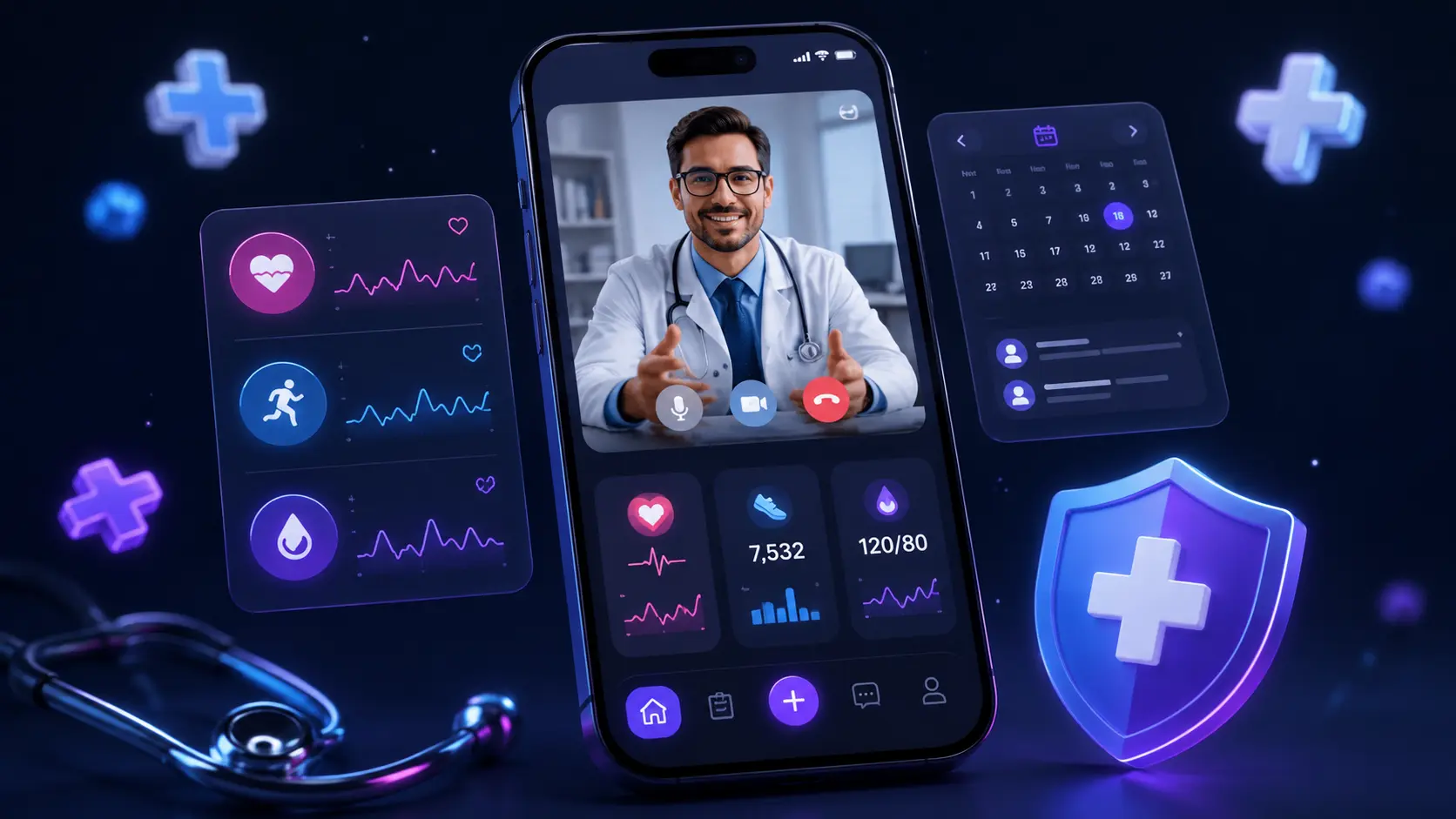
India’s digital health sector keeps growing fast. That’s why healthcare app development Hyderabad India businesses ask about most often falls into a few clear categories: telemedicine, appointment booking, and health tracking.
As a healthcare app development company in Hyderabad, we’ve built across all three. Here’s what actually matters in 2026.
The Digital Health Opportunity in India
Telemedicine adoption jumped sharply in recent years. It hasn’t slowed down. More patients now expect video consultations and digital records as standard, not a novelty.
This shift opens real opportunity. But it also raises the bar for what a healthcare app needs to deliver from day one.
Types of Healthcare Apps Worth Building
Most healthcare apps fall into a few categories:
- Telemedicine — video consultations connecting patients and doctors remotely
- Appointment booking — scheduling systems for clinics and hospitals
- EMR (Electronic Medical Records) — digital patient history and documentation
- Health tracking — fitness, vitals, and chronic condition monitoring
Each category has different technical and compliance demands. Picking the right one to start with matters.
Data Privacy and Compliance Requirements
Healthcare data is sensitive by nature. Any app handling patient information needs to align with data protection guidance from bodies like the Ministry of Health and Family Welfare and the National Digital Health Mission.
So this isn’t optional groundwork. Compliance needs to shape your data architecture from the very first sprint, not get bolted on before launch.
Core Features Patients Expect
- Video consultations with reliable, low-latency connections
- Prescription management — digital prescriptions patients can access anytime
- Lab report access — results delivered directly in-app, not by phone call
- Appointment reminders — automated notifications reducing no-shows
Skip any of these, and adoption suffers. Patients now expect this baseline.
Wearable Integration
Connecting to Apple Health and Google Fit lets your app pull real vitals data automatically. That’s a strong differentiator for chronic condition management apps especially.
This integration also reduces manual data entry. Patients are far more likely to keep using an app that does the work for them.
Recommended Technology Stack
- Frontend: Flutter, for consistent UI across iOS and Android
- Backend: Node.js for API and real-time consultation handling
- Cloud infrastructure: AWS Healthcare solutions, built with compliance frameworks in mind
- Video infrastructure: WebRTC-based solutions for reliable telemedicine calls
This stack balances speed to launch with the reliability healthcare apps demand.
Development Cost and Timeline
A focused telemedicine or appointment booking MVP typically takes a few months to build. Costs scale with the number of integrations — video, payments, EMR systems — and how much compliance automation the app needs.
Full EMR platforms with deep hospital integration take considerably longer and cost more, given the complexity of interoperability requirements.
How NRS Technologies Builds Secure Healthcare Apps
We treat patient data security as a foundational requirement, not a feature added late. Encryption, access controls, and audit logging get built into the data model from sprint one. Our mobile app development services cover this end to end.
For broader context on where the sector is heading, the WHO’s digital health resources are worth reviewing during early planning. Our web development services also support the admin dashboards these apps typically need.
Frequently Asked Questions
Does a healthcare app need government approval before launching? Requirements vary by app type. Apps handling sensitive patient data need to align with relevant data protection and digital health guidelines, so it’s important to assess this early in planning.
How long does it take to build a telemedicine app? A focused telemedicine MVP typically takes a few months, depending on how many integrations like payments and EMR systems are included.
Is wearable integration necessary for every healthcare app? No, it’s most valuable for chronic condition management or fitness-focused apps. Simple appointment booking apps may not need it at all.
What’s the biggest security concern in healthcare app development? Protecting sensitive patient data through encryption, access controls, and audit logging is typically the top priority, since a breach carries both legal and trust consequences.
Can a healthcare app start with just appointment booking and add telemedicine later? Yes, this is a common and practical approach. Launching with a focused feature set first lets you validate demand before investing in more complex functionality.
How much does a healthcare app cost to build in India? Costs depend heavily on scope. A simple appointment booking app costs meaningfully less than a full telemedicine platform with EMR integration and video infrastructure.
Final Thoughts
Healthcare apps reward businesses that treat compliance and security as core architecture, not an afterthought. Getting this right early avoids costly rework and builds the patient trust these apps depend on.
Ready to get started? Contact NRS Technologies at hello@nrstechnologies.com or visit nrstechnologies.com/contact for a free healthcare app consultation.