
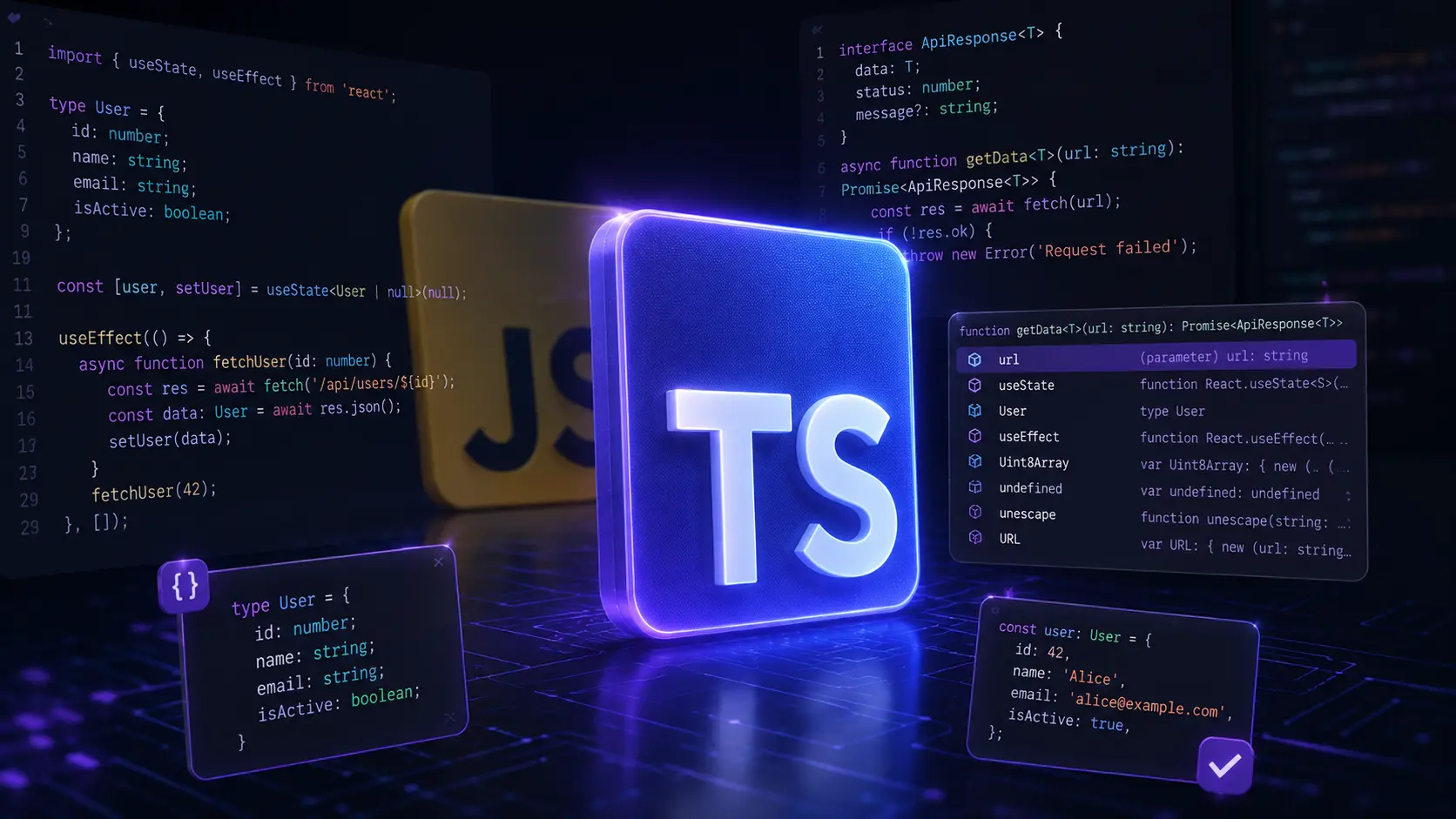
Most production codebases now run on TypeScript, not plain JavaScript. That shift matters for any TypeScript JavaScript web development Hyderabad business is planning for its next project.
As a web development company in Hyderabad, we default to TypeScript on nearly every new project. Here’s why that’s the right call in 2026.
What TypeScript Adds on Top of JavaScript
TypeScript is a superset of JavaScript. It adds static typing on top of the language you already know, catching errors before your code ever runs.
That’s the core value. Bugs get caught at write-time, not at runtime when a user hits them in production.
Real-World Benefits for Development Teams
Fewer bugs reach production. Type errors get flagged instantly in your editor, long before deployment.
IDE support improves dramatically too. Autocomplete becomes far more accurate when the editor knows exactly what shape your data takes.
Refactoring gets easier as well. Rename a function, and TypeScript flags every place that needs updating. Miss one in plain JavaScript, and you won’t find out until something breaks.
TypeScript Adoption in 2026
Adoption has climbed steadily for years now. npm trends data shows this clearly, and most major frameworks now treat TypeScript as a first-class citizen, not an afterthought.
So this isn’t a niche preference anymore. It’s closer to the industry default for serious projects.
Migrating an Existing JavaScript Project
You don’t need to rewrite everything at once. TypeScript supports gradual adoption — rename files to .ts, add types incrementally, and let the compiler guide you.
Start with your most critical, most-changed files first. That’s where type safety pays off fastest.
TypeScript with Next.js: Our Default Stack
Next.js has built-in TypeScript support, making it the natural pairing for most modern web projects. Setup takes minutes, not hours.
This combination is what we use across most web development projects at NRS Technologies. It gives clients more maintainable code without slowing down initial delivery.
Learning Curve and Team Training
TypeScript does add a learning curve, especially for developers new to typed languages. But most JavaScript developers pick up the fundamentals within a few weeks of daily use.
Communities like r/typescript and resources like Basarat’s TypeScript deep dive are strong references for teams ramping up.
When Plain JavaScript Still Makes Sense
Small scripts or quick prototypes sometimes don’t need the overhead of type definitions. For throwaway code, plain JavaScript can still be the faster choice.
That said, anything meant to last — a production app, a client project, a codebase multiple developers will touch — benefits from TypeScript’s safety net.
How NRS Technologies Uses TypeScript
We default to TypeScript on every serious client project, pairing it with Next.js for the frontend. This combination reduces bugs and speeds up long-term maintenance. Our web development services and broader portfolio reflect this approach across multiple industries.
For teams debugging tricky type issues, Stack Overflow’s TypeScript tag remains one of the most active, useful communities available.
Frequently Asked Questions
Is TypeScript harder to learn than JavaScript? It adds a learning curve, mainly around type syntax, but most JavaScript developers become comfortable with the fundamentals within a few weeks of regular use.
Do I need to rewrite my entire JavaScript project to use TypeScript? No. TypeScript supports gradual adoption, so you can rename files incrementally and add types over time without a full rewrite.
Does TypeScript slow down development? Initially, it can add slight overhead from writing types. Over time, it typically speeds up development by catching bugs early and improving IDE autocomplete.
Is TypeScript only useful for large projects? It provides the most value on larger, longer-lived codebases with multiple developers, but even smaller projects benefit from early bug detection.
Does Next.js require TypeScript? No, Next.js supports both JavaScript and TypeScript, but TypeScript integration is built in and widely recommended for production projects.
Can TypeScript and JavaScript coexist in the same project? Yes, this is common during migration. TypeScript compiles down to JavaScript, so both file types can exist together while a codebase transitions gradually.
Final Thoughts
TypeScript isn’t a trend anymore — it’s the practical default for serious, long-lived web projects. The upfront investment in learning pays off quickly in fewer bugs and easier maintenance.
Ready to get started? Contact NRS Technologies at hello@nrstechnologies.com or visit nrstechnologies.com/contact for a free technical consultation.