

React Server Components represent one of the biggest architectural shifts in frontend development in years, yet many teams still aren’t using them correctly. That’s the gap driving most React Server Components web development Hyderabad clients ask us to help close.
As a web development company in Hyderabad building on Next.js daily, here’s what actually matters about this shift.
What React Server Components Actually Are
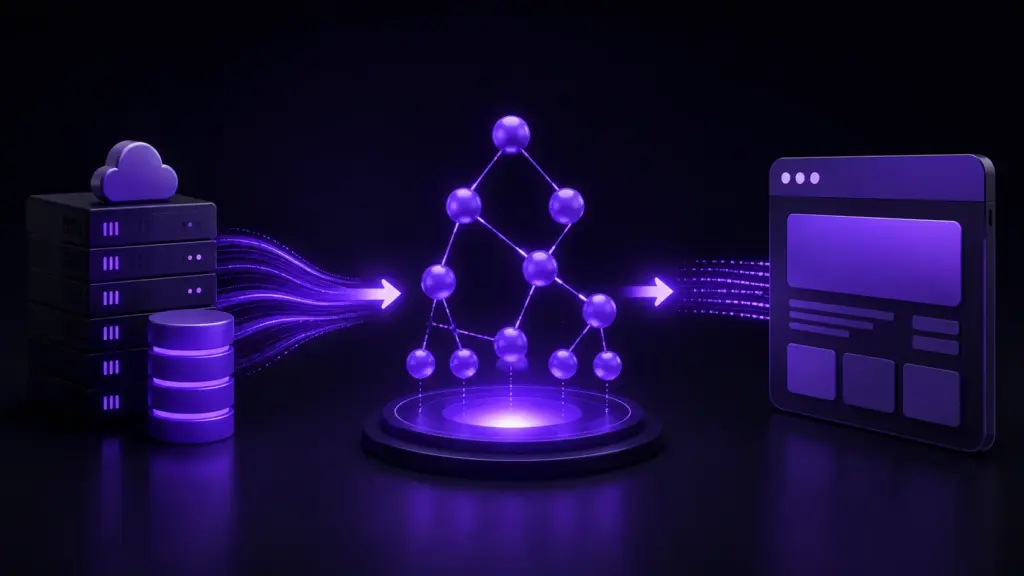
Traditional React components run entirely in the browser. Server Components run on the server instead, sending only the rendered result to the client, not the full JavaScript needed to render them.
This distinction matters enormously for performance. Less JavaScript shipped to the browser means faster page loads, especially on slower connections.
Why This Matters for Performance
Every kilobyte of JavaScript sent to a browser takes time to download, parse, and execute. Server Components reduce this bundle size significantly for components that don’t need client-side interactivity.
So the win isn’t theoretical — it’s a measurable reduction in the work a visitor’s device has to do before your page becomes usable.
Server Components vs Client Components
Not everything can be a Server Component. Interactive elements — buttons, forms, anything using state or browser APIs — still need to run as Client Components in the browser.
The skill is knowing which is which. Static content, data fetching, and non-interactive UI belong on the server; interactivity belongs on the client.
How Next.js Implements This
Next.js’s App Router treats Server Components as the default, requiring an explicit “use client” directive only when client-side interactivity is needed. This default-to-server approach nudges developers toward better performance by default, rather than requiring extra effort to achieve it.
Data Fetching Gets Simpler
Server Components can fetch data directly within the component, without needing a separate API route just to pass data to the client. This removes a layer of complexity that traditional React apps typically required.
That said, this shift requires rethinking patterns many developers learned with older React versions. It’s a genuine mental model change, not just new syntax.
Real Performance Impact
Sites migrating meaningful portions of their UI to Server Components commonly see measurable improvements in initial load metrics, particularly Time to Interactive. The exact improvement varies by how much of the original app was unnecessarily client-rendered before migration.
Common Migration Challenges
Existing codebases built entirely with Client Components require careful, incremental migration rather than an all-at-once rewrite. Trying to convert everything simultaneously risks breaking interactive features that genuinely need client-side execution.
Start with your least interactive, most content-heavy pages first. These see the biggest performance gains with the lowest migration risk.
How NRS Technologies Uses Server Components
We architect new Next.js projects with Server Components as the default, only opting into client-side rendering where genuine interactivity is needed. Our web development services build this performance-first approach into every project from the start.
As a result, clients get faster-loading sites without sacrificing the interactive features their users expect. For existing sites, our team also handles incremental Server Components migration as part of ongoing Website AMC performance work.
Frequently Asked Questions
Do React Server Components replace Client Components entirely? No, interactive elements like forms and buttons still require Client Components. Server Components handle non-interactive, content-heavy parts of the UI instead.
Does using Server Components require Next.js specifically? Server Components are a React feature, but Next.js’s App Router provides the most mature, production-ready implementation currently available for most projects.
Can an existing React app migrate to Server Components gradually? Yes, and this is the recommended approach. Migrating incrementally, starting with content-heavy, less interactive pages, reduces risk compared to a full rewrite.
How much of a performance improvement do Server Components actually provide? It varies by project, but sites with significant amounts of unnecessarily client-rendered content commonly see measurable improvements in load time and Time to Interactive after migration.
Do Server Components simplify data fetching? Yes, they allow data fetching directly within the component on the server, removing the need for a separate API route just to pass data to the client in many cases.
Is migrating to Server Components worth it for a small website? For smaller, mostly static sites, the performance gains may be less noticeable, though new projects still benefit from starting with this architecture by default.
Final Thoughts
React Server Components represent a genuine shift in how modern web apps should be architected, not just a new API to learn. Understanding which components belong on the server versus the client is the core skill this shift requires.
Ready to get started? Contact NRS Technologies at hello@nrstechnologies.com or visit nrstechnologies.com/contact for a free performance consultation.