
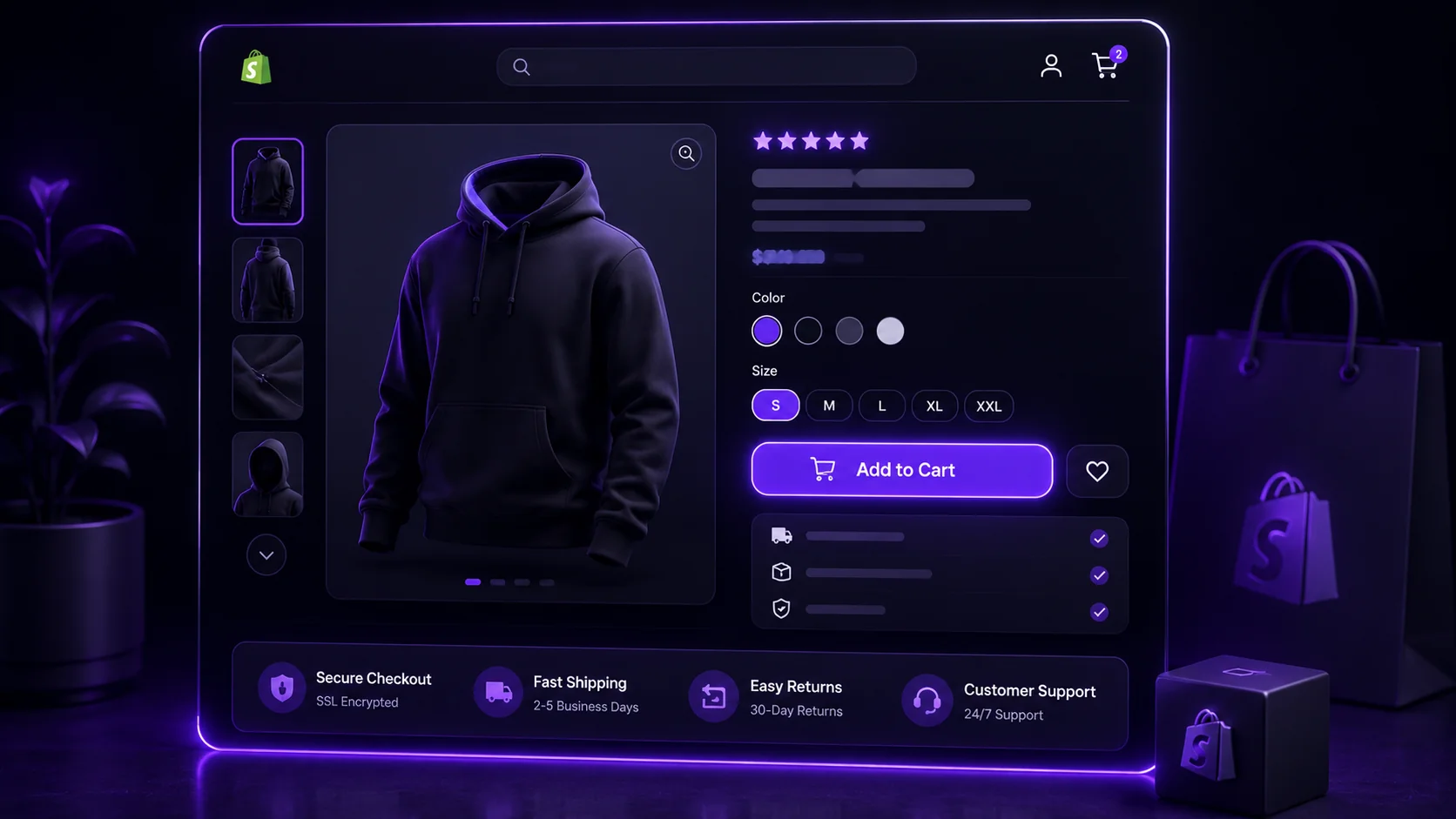
A beautiful Shopify store means nothing if it doesn’t convert visitors into buyers. That’s the gap Shopify store design Hyderabad businesses often discover only after launch, when traffic arrives but sales don’t follow.
As an eCommerce development company in Hyderabad, we’ve rebuilt enough underperforming stores to know which patterns actually move the needle. Here are the eight that matter most.
1. A Clear Value Proposition Above the Fold
Visitors should understand what you sell and why it’s worth buying within seconds of landing on your homepage. Vague, clever taglines lose to clear, direct ones almost every time.
So lead with clarity, not cleverness. Save personality for elsewhere on the page.
2. High-Quality Product Photography
Product images carry more weight in eCommerce than almost any other design element. Multiple angles, lifestyle shots, and zoom functionality all reduce the uncertainty that stops people from buying online.
Cutting corners here directly costs conversions. This is rarely the place to save budget.
3. Simplified Navigation
Too many menu categories overwhelm shoppers before they’ve even started browsing. Group products logically, and keep your main navigation focused on the paths customers actually take.
A confused shopper leaves. A guided one buys.
4. Prominent Trust Signals
Security badges, return policy visibility, and customer review counts all reduce hesitation at the exact moments shoppers are deciding whether to trust you. Place these near add-to-cart buttons, not buried in a footer.
This matters even more for newer stores without established brand recognition yet.
5. Streamlined Checkout Flow
Every unnecessary step in checkout is a chance to lose the sale. Guest checkout, minimal form fields, and clear progress indicators all reduce this friction significantly.
Test your own checkout regularly. What feels fine to you as the store owner might feel tedious to a first-time buyer.
6. Mobile-Optimized Design
Most Shopify traffic arrives on mobile devices, yet many stores are still designed desktop-first and shrunk down afterward. This produces cramped layouts and frustrating tap targets.
Design mobile-first instead. Everything else should scale up from there, not down.
7. Urgency and Scarcity Done Honestly
Limited stock indicators and genuine time-sensitive offers can improve conversion, but only when they’re truthful. Fake urgency erodes trust the moment shoppers notice the pattern repeating indefinitely.
Use this sparingly and honestly. Trust, once broken, is expensive to rebuild.
8. Fast Loading Speed
A slow Shopify store loses shoppers before they even see your carefully designed product pages. Image optimization and minimal, purposeful app installs both help keep load times competitive.
Every additional app you install adds its own script weight. Audit your app list regularly and remove anything not actively earning its keep.
How NRS Technologies Designs High-Converting Shopify Stores
We build every Shopify store around these eight patterns from the start, not retrofitted after launch once conversion problems appear. Our eCommerce development services cover full store design and setup.
As a result, clients launch stores built to convert from day one, not stores that need a redesign six months later. Our UI/UX design services also support ongoing conversion optimization once real user data starts coming in.
Frequently Asked Questions
What’s the single most important design element for Shopify conversion? Product photography typically has the largest single impact, since it directly reduces the uncertainty that stops shoppers from buying online.
Should a Shopify store be designed mobile-first? Yes, most Shopify traffic arrives on mobile devices, so designing mobile-first and scaling up to desktop produces better results than the reverse approach.
Do trust badges actually improve conversion rates? Yes, particularly for newer stores without established brand recognition. Placing them near the add-to-cart button, rather than the footer, maximizes their impact.
How many steps should a Shopify checkout have? As few as possible. Guest checkout and minimal required fields consistently reduce cart abandonment compared to longer, multi-step checkout flows.
Can too many Shopify apps slow down my store? Yes, each installed app adds its own script weight, which can meaningfully slow load times. Regularly auditing and removing unused apps helps maintain speed.
Is urgency messaging effective for Shopify stores? Yes, but only when genuine. Fake or repeated urgency claims erode shopper trust once noticed, ultimately hurting conversion more than helping it.
Final Thoughts
Shopify store design succeeds when every element serves conversion, not just visual appeal. These eight patterns consistently separate stores that sell from stores that simply look good.
Ready to get started? Contact NRS Technologies at hello@nrstechnologies.com or visit nrstechnologies.com/contact for a free Shopify store audit.