
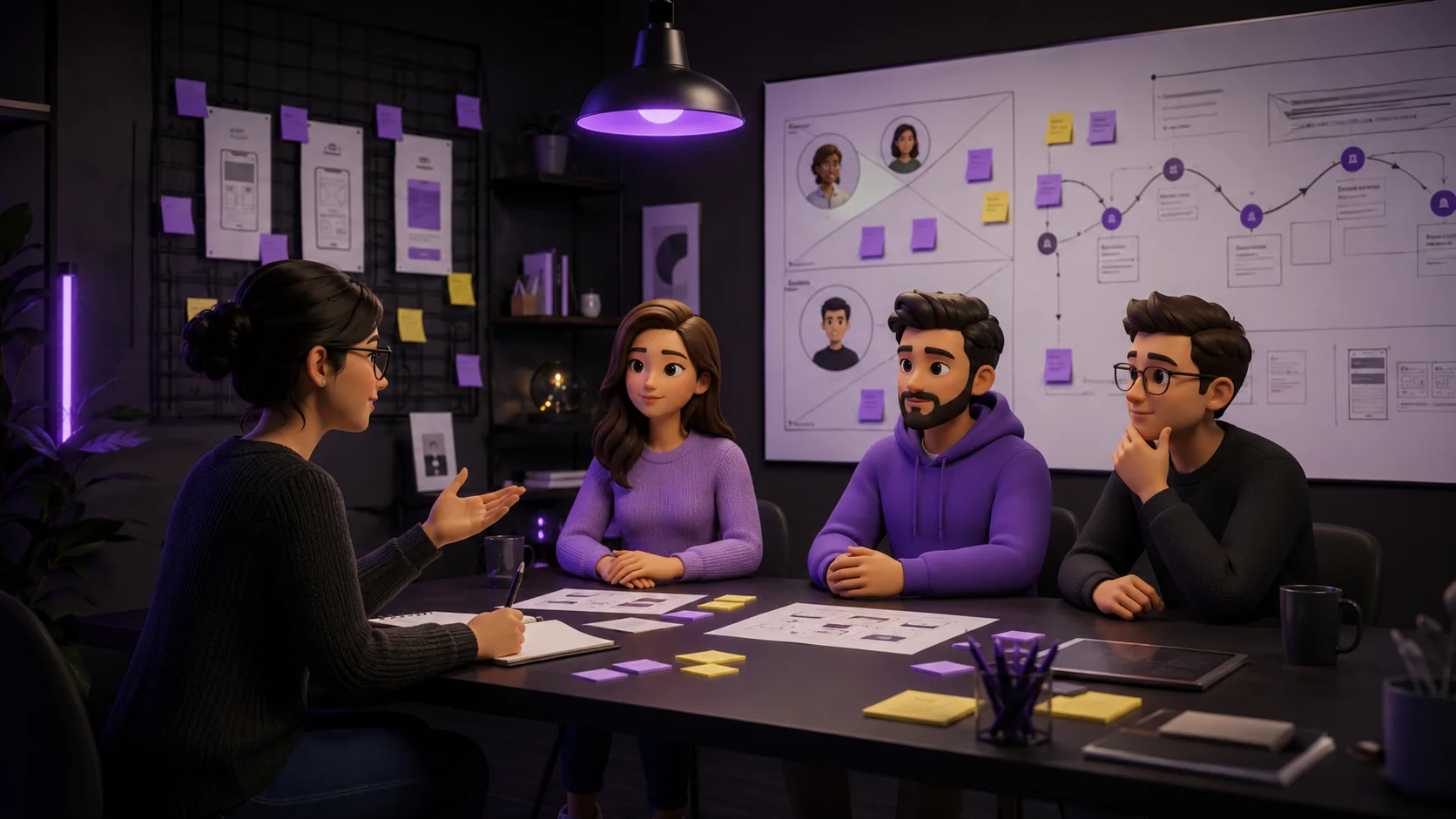
Building a full product before talking to a single real user is one of the most expensive mistakes a startup can make. That’s exactly why user research UX design Hyderabad teams recommend starting small, and starting early.
As a UI/UX design company in Hyderabad, we run research before design work begins on nearly every project. Here’s how to do it properly.
Why User Research Comes Before Design
Design decisions made on assumptions instead of evidence tend to fail expensively, after development time and budget are already spent. Research catches these gaps before they become costly rebuilds.
So the goal isn’t to slow down development — it’s to make sure you’re building the right thing before committing real resources to it.
User Interviews: The Foundation Method
One-on-one interviews reveal what users actually think and feel, in their own words, rather than what you assume they think. Ask open-ended questions and resist the urge to lead them toward answers you want to hear.
Five to eight interviews per user segment typically reveal the majority of major patterns, without needing dozens of conversations.
Surveys for Quantitative Validation
Once interviews surface patterns, surveys can validate how widespread those patterns actually are across a larger audience. This combination — qualitative depth, then quantitative scale — gives a more complete picture than either method alone.
Keep surveys short. Long surveys see dramatically lower completion rates, which skews your data toward only the most motivated respondents.
Usability Testing With Prototypes
Watching real users attempt tasks on a prototype reveals friction points no amount of internal team review will catch. Users get stuck in places designers never expect, precisely because designers already know how the interface works.
Even a low-fidelity prototype tested with five users typically surfaces the majority of significant usability issues.
Empathy Maps and User Journey Mapping
Empathy maps organize research findings around what users think, feel, say, and do — helping teams build genuine understanding, not just a feature checklist. Journey maps then trace the full experience across every touchpoint, revealing gaps between stages.
Both tools work best displayed visibly during design work, keeping real user context present throughout the process.
Competitive and Market Research
Understanding what competitors offer, and where their products fall short, reveals opportunities your own research alone might miss. This isn’t about copying — it’s about finding the gap you can genuinely fill better.
Sticky Notes and Collaborative Synthesis
Physical or digital sticky notes, clustered by theme during team workshops, help synthesize research findings into clear, actionable patterns. This collaborative process also builds shared understanding across the whole team, not just whoever conducted the interviews.
How NRS Technologies Approaches User Research
We run structured interviews, usability testing, and journey mapping before committing to final design decisions on client projects. Our UI/UX design services include this research phase as standard practice, not an optional add-on.
As a result, clients avoid building expensive features nobody actually wants. Our mobile app development services and web development services both build directly on validated research findings from this process.
Frequently Asked Questions
How many user interviews are enough to find meaningful patterns? Five to eight interviews per user segment typically reveal the majority of major patterns, though additional segments may need their own separate round.
Should user research happen before or after building a prototype? Ideally both. Initial interviews inform early design direction, while usability testing on a prototype validates whether those design decisions actually work for real users.
What’s the difference between empathy maps and journey maps? Empathy maps organize what users think, feel, say, and do at a given moment, while journey maps trace the full experience across every touchpoint over time.
How long should a user research survey be? As short as possible. Long surveys see dramatically lower completion rates, which skews results toward only the most motivated respondents.
Can usability testing work with a low-fidelity prototype? Yes, even a simple, low-fidelity prototype tested with five users typically surfaces the majority of significant usability issues before full development begins.
Is competitive research a substitute for direct user research? No, competitive research reveals market gaps and opportunities, but it doesn’t replace direct conversations with your own actual or potential users.
Final Thoughts
User research isn’t a delay before real work begins — it is the real work that prevents expensive, avoidable mistakes later. A small investment upfront consistently saves far more in wasted development time.
Ready to get started? Contact NRS Technologies at hello@nrstechnologies.com or visit nrstechnologies.com/contact for a free product research consultation.